Building and Gardens
In 1907, during the Second Hague Peace Conference, the first stone was laid for the construction of the Peace Palace. The design of the Peace Palace came from French architect Louis Cordonnier, who won the international competition with a total of 216 entries. During construction, the design was modified by Dutch architect and site manager Johan van der Steur. The landscape around the Peace Palace was designed by British garden architect Thomas Mawson.
After a six-year construction period, the Peace Palace was officially opened on 28 August 1913.

Architecture
For the design of the Peace Palace the jury launched an international architecture competition. The competition enjoyed enormous interest: a choice had to be made out of 216 contributions sent in from all over the world. From the large variety of drawings the jury selected 6 prize winners and awarded first prize to the design…

Garden of the Peace Palace
The Peace Palace is surrounded by six hectares of gardens comprising woodland, lawns, ponds, shrubs, flower borders, container plants and a rose garden. Andrew Carnegie wished for the Peace Palace to stand independently within its surroundings, surrounded by a garden. This wish played a part in the decision to build the Peace Palace on a…

Art & Interior
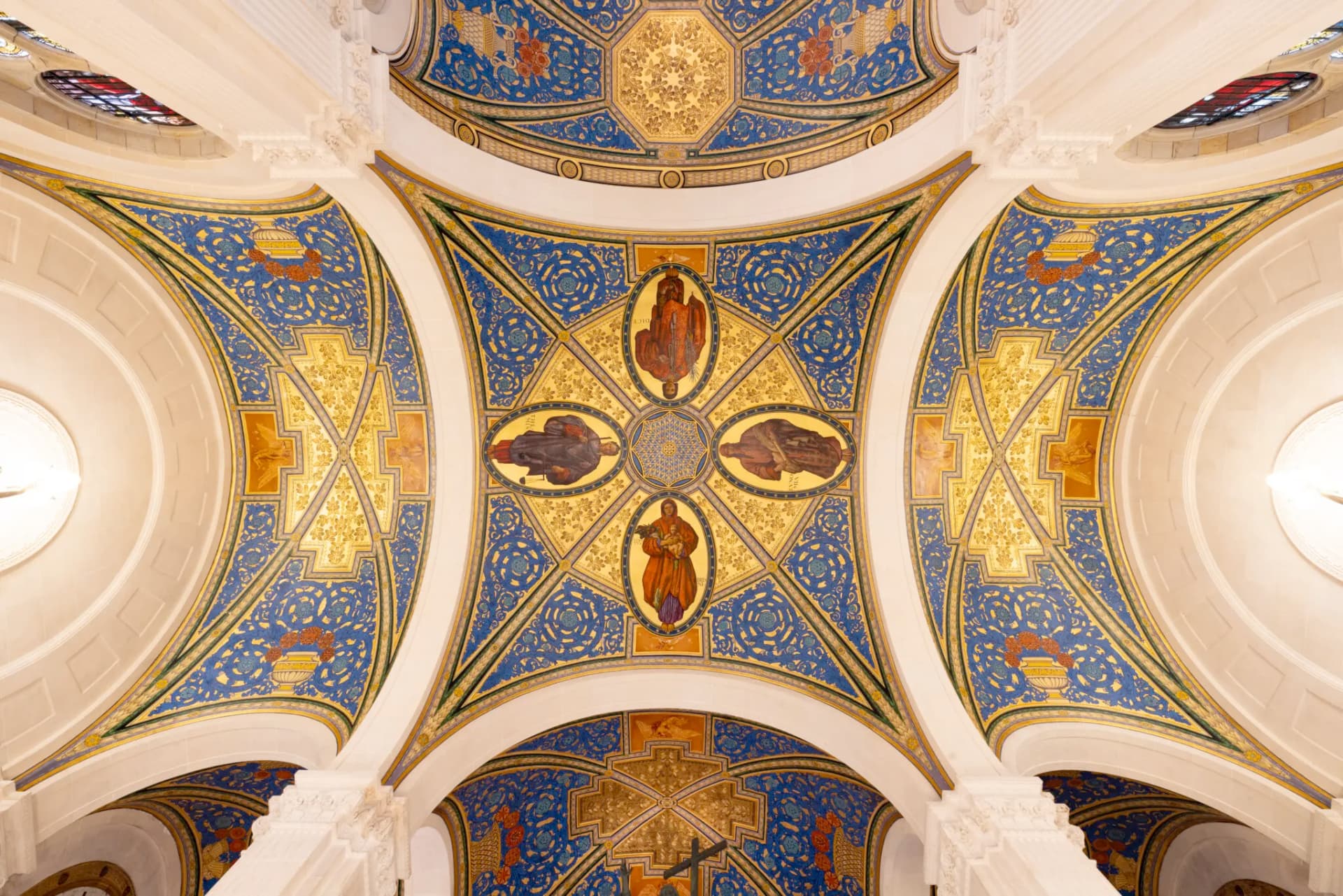
The Peace Palace is an iconic building. Both the exterior and the interior are characterized by special decorative elements, works of art, sculptures and ceiling paintings that are still in their original state. The ideal of peace is reflected in every detail and the motto “Peace through Law” is mirrored in various objects and images….